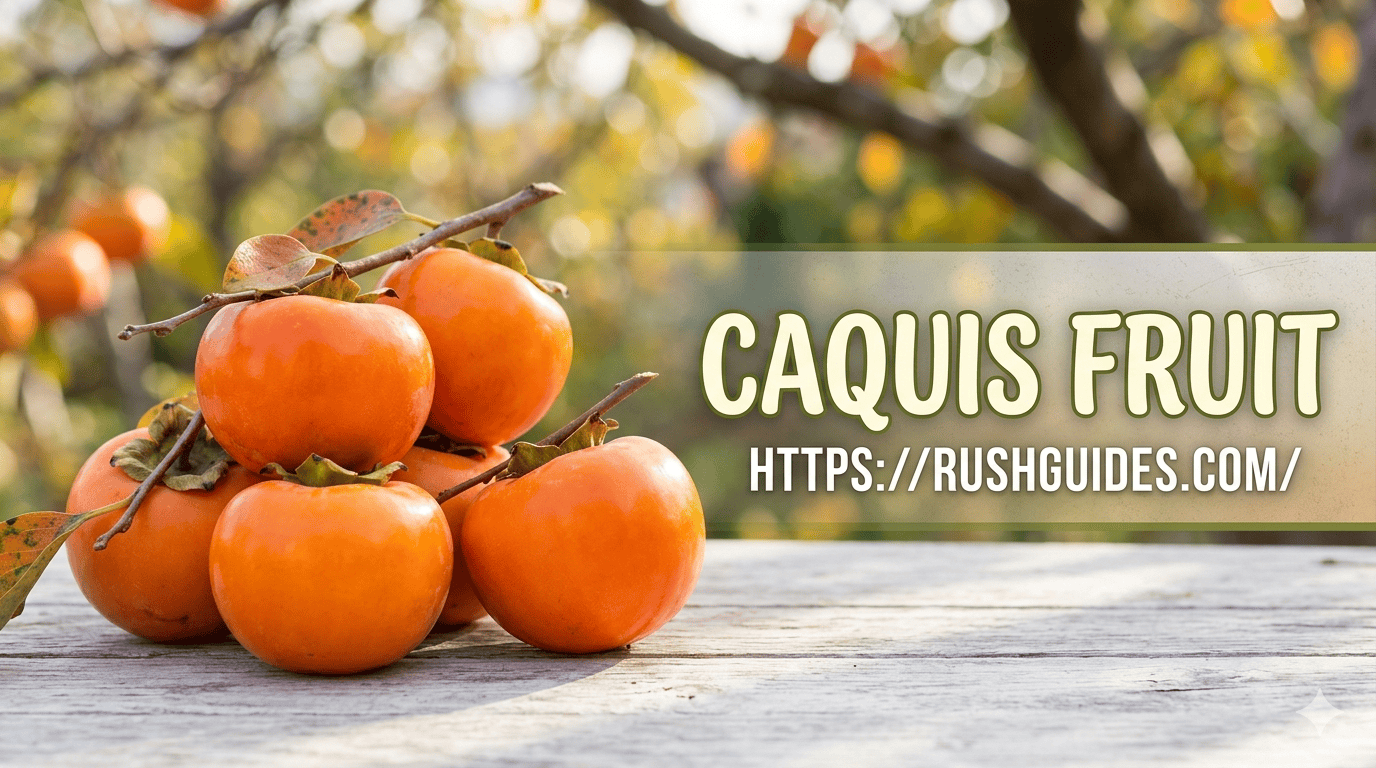
You’ve probably walked past it at the supermarket in autumn and thought “what even is that?” The bright orange globe sitting next to the apples, looking vaguely like a tomato that got lost. That’s a caquis fruit, and if you haven’t tried one yet, you’re genuinely missing out.
Caquis fruit is having a moment right now, and for good reason. It’s sweet, it’s nutritionally impressive, and it’s one of those rare fruits that tastes like a treat while actually doing something useful for your body. This guide breaks down everything you need to know: what caquis actually is, where the best ones come from, the full nutrition breakdown, real health benefits backed by research, and exactly how to eat it.
What Is Caquis Fruit?
Caqui is simply the Spanish name for persimmon. Persimmon is the English term. The two words refer to the same fruit, scientifically known as Diospyros kaki. So if you’ve ever eaten a persimmon in the UK or US, you’ve already had a caqui without knowing it.
Where things get slightly more interesting is with the word “Persimon” (one “m”). Persimon is a registered commercial brand name used primarily in Spain for a specific variety of caqui that has undergone a special treatment to remove astringency while maintaining a firm texture.
The Ribera del Xúquer valley in Valencia represents the heart of caquis persimon cultivation. This valley sits along the banks of the Júcar and Magro rivers, where mild temperatures, low rainfall, and mountain protection from frost create near-perfect growing conditions.
The Rojo Brillante Variety: Spain’s Star Caqui
The variety driving Spain’s caqui boom is called Rojo Brillante, which literally translates to “Bright Red.” The Rojo Brillante variety originated naturally by spontaneous mutation in the mid-1950s from another local variety called “Cristalino,” which was grown in the Ribera Alta region.
The variety became so popular in the late 20th century that it was given a Protected Designation of Origin in 1998. The Denomination of Origin group is comprised of over 6,000 farmers in Valencia, and most of the farms are small, family-run operations that have been growing the persimmon variety for several generations.
Nearly half of the nearly 100 million kilograms of persimmons produced in Spain each year bear this prestigious quality guarantee. That’s not a niche crop. That’s serious scale.
In the late 1990s, growers started using natural techniques to eliminate the astringency of this fruit, which brought about a new way of eating and using it, now known commercially as Persimon. The process involves exposure to high levels of carbon dioxide, which neutralises the tannins responsible for that unpleasant dry, puckering sensation you get from underripe fruit.
Caquis Fruit Nutrition Facts
Here’s what you’re actually getting per 100g of caquis fruit (Japanese persimmon), according to USDA data:
| Nutrient | Per 100g |
| Calories | 70 kcal |
| Carbohydrates | 18.59g |
| Sugars | 12.53g |
| Dietary Fibre | 3.6g |
| Fat | 0.19g |
| Protein | 0.58g |
| Vitamin C | 7.5mg (8% DV) |
| Vitamin A (beta-carotene) | 9% DV |
| Potassium | 161mg |
| Manganese | 0.355mg (15% DV) |
| Vitamin B6 | 0.1mg (6% DV) |
| Vitamin E | 0.73mg (5% DV) |
A typical serving of caqui is around one medium fruit (about 168 grams), which provides approximately 118 calories, 31 grams of carbs, and 6 grams of fibre.
Caqui is slightly higher in calories and carbohydrates than apples or pears, with 70 calories and 18.59 grams of carbs per 100 grams, compared to around 52 calories and 14 grams of carbs in apples. Worth knowing if you’re tracking macros, but not a reason to avoid it by any stretch.
The sugar content in persimmon flesh is higher than in apples, peaches, oranges and pears, amounting to 12.5g per 100g. That’s where the honey-sweet flavour comes from.
Health Benefits of Caquis Fruit
It’s Loaded With Antioxidants
Research has identified gallic acid as the predominant phenolic compound in persimmon, followed by ellagic and p-coumaric acids. Antioxidant evaluation demonstrated strong radical-scavenging and reducing capacities, confirming broad antioxidant activity.
Persimmon is rich in antioxidants such as ascorbic acid, carotenoids and various polyphenols including tannins. Tannins are reported to exert antioxidant, anti-inflammatory, anti-tumour, antihypertensive, and antidiabetic activities, according to multiple peer-reviewed sources.
In plain terms: this fruit punches well above its weight when it comes to fighting oxidative stress. That matters because chronic oxidative stress is linked to ageing, inflammation, and a long list of diseases you’d rather not deal with.
Digestive Support
Caqui is rich in fibre (3.6 grams per 100 grams), which aids digestion and promotes gut health. That fibre content also qualifies it for an EU “source of fibre” nutrition claim, as 100g of persimmon provides more than 3g of fibre.
The significant dietary fibre content promotes regular bowel movements and supports a healthy gut microbiome. Soluble and insoluble fibre work together here, which is why caquis tends to feel genuinely satisfying rather than just sweet.
Heart Health Support
Potassium helps regulate blood pressure, while antioxidants combat oxidative stress, both contributing to cardiovascular wellness.
The anti-inflammatory properties of the tannins and flavonoids found in caquis also play a role. Chronic low-grade inflammation is increasingly understood as a driver of cardiovascular disease, and fruits high in polyphenols appear to help counteract that.
Vision and Immune Function
High Vitamin A content is key for maintaining good eyesight and preventing age-related macular degeneration. Generous amounts of Vitamin C and A also enhance immune system function, helping the body fight off infections.
Manganese is another standout. Manganese is a co-factor for the enzyme superoxide dismutase, which is a very powerful free radical scavenger. At 15% of the daily recommended intake per 100g, caquis is a genuinely meaningful source.
Blood Sugar Management
The fibre content can help slow down sugar absorption, contributing to more stable blood glucose levels. That said, due to its natural sugars and carbohydrates, moderation is recommended for those watching their sugar intake. One medium fruit as a snack is a solid, sensible portion.
Caqui vs Persimmon vs Persimon: Sorting Out the Confusion
People use these words interchangeably, but there are real distinctions worth knowing.
Caqui / Kaki = the Spanish or Italian name for the fruit, from the Japanese word kaki. Same fruit as persimmon.
Persimmon = the English name for Diospyros kaki, covering all varieties globally.
Persimon (one “m”) = a specific trademark registered by the PDO Kaki Ribera del Xúquer designation in Spain. It refers specifically to Rojo Brillante persimmons that have been treated to remove astringency and are ready to eat firm.
The two main varieties you’ll encounter in shops are Fuyu (flat-bottomed, firm, non-astringent, great for eating fresh) and Hachiya (elongated, must be fully soft before eating, best for baking). The Rojo Brillante from Spain sits somewhere between the two in terms of texture: sweet and not quite as crisp as an apple, more like the texture of good melon.
When Is Caquis Fruit in Season?
The fruit typically ripens in autumn, making it a seasonal favourite. From Valencia, fruit is naturally mature by mid-October. The season generally runs from October through to December, occasionally into January for some varieties.
You won’t find caquis at their best year-round, which is part of their appeal. They’re a proper seasonal fruit. When autumn rolls around, that’s your window.
How to Eat Caquis Fruit
This is where a lot of people get tripped up. The eating method depends entirely on which variety you have.
Firm caquis (Rojo Brillante / Persimon / Fuyu-type):
These can be eaten while still firm. Peel the skin with a vegetable peeler, slice off the top, and cut into wedges or rounds. Because they remain firm at ripeness, these varieties are ideal for slicing into salads, roasting, or eating raw as a snack. They slice beautifully and hold their shape, which makes them perfect for a cheeseboard or autumn salad.
Soft astringent caquis (Hachiya-type):
Do not eat these until completely soft. If you bite in early, you’ll experience what tannin overload actually feels like. Wait until the skin is wrinkly and the flesh yields like ripe avocado, then cut it in half and scoop the flesh with a spoon. The flesh is typically pureed into a pulp and mixed into quick breads, muffins, cakes and cookies.
Storage Tips
For Rojo Brillante, it is advisable to keep persimmons at room temperature to help them ripen and obtain a much sweeter and tastier flavour. It is better not to let them become soft in order to enjoy all their flavour and texture.
If you’ve bought firm caquis and want to speed up ripening slightly, placing them in a bag with a banana or apple (which release ethylene gas) does the job.
Ways to Use Caquis Fruit in the Kitchen
The flavour has been described as a mix of honey, mango, and apricot. That combination makes it surprisingly versatile across both sweet and savoury applications.
Fresh and simple: Slice and eat as a snack, or serve on a board with aged manchego, walnuts, and honey. The sweetness plays brilliantly against salty, hard cheeses.
In salads: From savory appetizers to sweet salads, persimmons shine in a variety of dishes. Their sweetness and firm texture are perfect for bruschetta with creamy burrata or in a hearty kale and quinoa salad with fresh citrus.
In baking: Persimmon bars sweetened with dates, spiced with cinnamon, nutmeg, and cloves, and coated with a tart lemon glaze are an old-school classic worth trying.
In chutneys and sauces: Persimmon-cranberry chutney that includes onions, fresh ginger, red chili flakes, apple cider vinegar and brown sugar works as a fantastic accompaniment to pork or roasted chicken.
In cocktails: Persimmon juice pairs with dry vermouth and a cardamom-star anise syrup for a genuinely compelling autumn cocktail.
Anything to Watch Out For?
Caquis is safe for most people, but a couple of things are worth knowing.
Unripe astringent varieties like Hachiya can cause a dry, puckering sensation if consumed before fully ripe. That’s the tannin content at work. It won’t hurt you but it’s not pleasant.
Persimmons contain oxalates, which are linked to a type of kidney stone called calcium oxalate stones. They’re mainly harmless, but people prone to developing calcium oxalate stones should be mindful.
Sugar-conscious eaters should note the natural sugar content is higher than many common fruits. Enjoying one medium caqui as part of a balanced diet is sensible.
FAQ: Caquis Fruit
Is caqui the same as persimmon?
Yes. Caqui is the Spanish word for persimmon, which is the English name for Diospyros kaki. They are the same fruit.
Can you eat the skin of a caqui?
Technically yes, but most people prefer to peel it. The skin on Rojo Brillante and Fuyu-type varieties is thin and edible, though slightly tough. Hachiya skin is usually best discarded.
What does caquis fruit taste like?
Sweet, with notes of honey, apricot, and a hint of mango when fully ripe. Firm varieties have an apple-like crunch; soft varieties taste almost custard-like.
When is caquis fruit available?
Autumn and early winter, typically October through December. It’s a strictly seasonal fruit, which makes it worth grabbing when it appears.
Is caquis fruit good for weight loss?
At 70 calories per 100g with 3.6g of fibre, it’s a reasonably low-calorie, high-satiety option. The natural sugar content means it satisfies sweet cravings without reaching for processed snacks.
What’s the difference between caqui and Persimon?
Persimon (one “m”) is a registered trademark for PDO-certified Rojo Brillante persimmons grown in the Ribera del Xúquer region of Valencia, Spain. Not every caqui is a Persimon, but every Persimon is a caqui.
Caquis fruit is one of those autumn gems that rewards anyone who takes the time to understand it. Buy it firm, peel it, slice it, and get it on a cheeseboard or into a salad before the season ends. Or wait until it’s soft and bake it into something. Either way, you’re getting a fruit that genuinely delivers on both flavour and nutrition, which is a combination that doesn’t come along as often as it should.
Read More About: Candizi