You’re standing at a kebab counter at 1am, staring at a menu with words like “shish,” “döner,” and “adana,” and you have absolutely no idea what separates one from the other. You’re not alone. Kebab is one of those words that gets used so loosely in English that most people couldn’t actually tell you what makes a kebab a kebab, let alone the difference between a dozen regional versions.
Here’s the short version before we get into it: kebab is a category, not a single dish. It covers a wide range of skewered and grilled meat dishes that started in the Middle East and spread through the Balkans, the Caucasus, and Central and South Asia before becoming a worldwide staple. What lands on your plate depends entirely on where the recipe came from and who’s cooking it.
What Actually Counts as a Kebab
The confusion starts because the word means different things depending on which country you’re in. In everyday English, “kebab” with no other word attached usually means shish kebab, the kind cooked on a skewer. But in the Middle East, the term is broader. It can refer to meat cooked over or beside an open flame, whether that’s large cuts, small chunks, or ground meat, served on a plate, stuffed into bread, or scooped into a bowl.
So when someone says “I’m getting a kebab tonight,” they could mean a dozen different things depending on their background.
The Main Types You’ll Actually Run Into
Shish Kebab
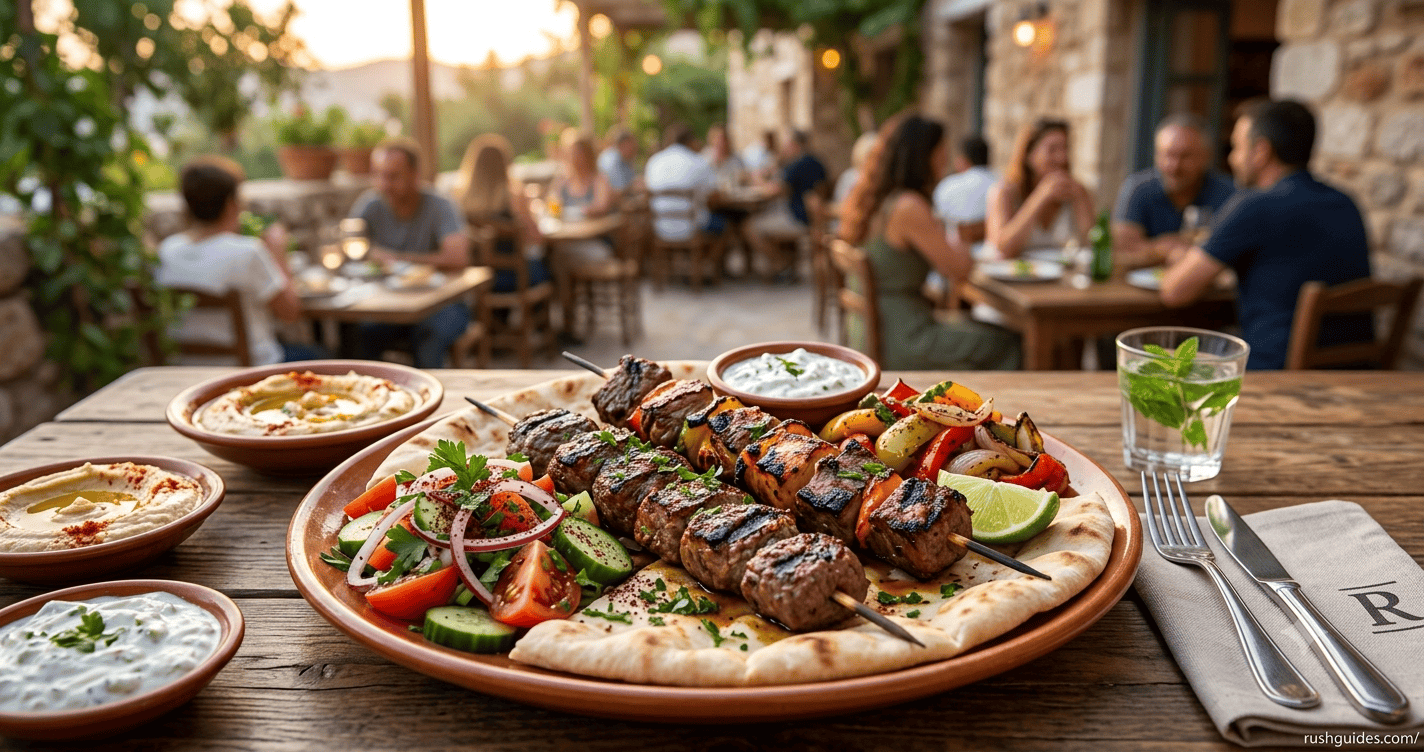
This is the original image most people have in their head: cubes of meat threaded onto a skewer and grilled over fire. The traditional meat is lamb, though regional versions swap in beef, goat, chicken, fish, or pork depending on local tastes and religious restrictions. It’s simple, it’s old, and it’s still the benchmark every other kebab gets compared to.
Döner Kebab
If you’ve eaten kebab in a European city, this is almost certainly what you got. It’s meat (usually lamb, beef, or chicken, sometimes a mix) stacked on a vertical rotisserie, slow roasted, and shaved off in thin strips. It’s the version that ends up wrapped in flatbread with salad and sauce, and it’s the one that built an entire late night food culture across the UK and Germany in particular.
Shawarma
Cousin of the döner, made the same vertical rotisserie way but rooted in Levantine cooking. The seasoning leans more heavily on spices like cumin, cardamom, and turmeric, and it’s typically served with garlic sauce, pickles, and flatbread. People argue endlessly about whether shawarma and döner are the same thing wearing different names. They’re close, but the spice profile and serving style usually give it away.
Seekh Kebab
Ground meat, usually lamb or beef, mixed with onion, ginger, garlic, and a heavy hand of spices, then molded onto a skewer before grilling. This is the South Asian heavyweight, common across Pakistan and India, and it’s noticeably more spiced and softer in texture than shish.
Chapli Kebab
A flatter, patty style kebab that’s huge in Pakistan, particularly Peshawar. It’s made from minced meat mixed with tomato, pomegranate seeds, and coriander, then shallow fried rather than skewered. If you’ve had this one, you know it’s a different eating experience entirely from anything on a stick.
Adana and Urfa Kebab
Named after the Turkish cities they come from. Adana kebab is spicy, hand minced lamb on a wide skewer. Urfa kebab is its milder sibling, made the same way but without the chili kick. Both are grilled over charcoal and usually served with grilled tomatoes, peppers, and flatbread.
Kafta Kebab
Common across the Levant and Gulf region, made from spiced ground beef or lamb mixed with parsley and onion, formed around a skewer or shaped into logs. Often grilled, sometimes simmered in a tomato based sauce instead.
Tas Kebab
Worth a mention because it breaks the rule entirely. Not every kebab dish is even grilled. Tas kebab is prepared as a stew rather than cooked on a skewer, proving the category is really about the cut and seasoning of the meat more than the cooking method itself.
A Quick Comparison
| Kebab Type | Origin | Meat Style | Cooking Method |
| Shish | Middle East / Turkey | Cubed | Skewer, open flame |
| Döner | Turkey | Stacked, shaved | Vertical rotisserie |
| Shawarma | Levant | Stacked, shaved | Vertical rotisserie |
| Seekh | South Asia | Ground | Skewer, grill |
| Chapli | Pakistan | Ground, patty | Shallow fried |
| Adana | Turkey (Adana) | Hand minced | Skewer, charcoal |
| Kafta | Levant / Gulf | Ground | Skewer or stew |
| Tas | Turkey | Cubed | Stewed |
Why the Word Travelled So Far
Kebab didn’t stay confined to one region for long. Like a lot of foods carried by travellers, it became part of daily eating habits in country after country, picking up local ingredients and techniques along the way. That’s why a kebab in Berlin, a kebab in Lahore, and a kebab in Beirut can all be technically correct uses of the word while tasting nothing alike.
Linguists actually flag kebab as a case study in how food words cross borders. It’s listed alongside words like disc, copy, duvet, boutique, and sushi as one of the rare terms that’s become both an internationalism and a translinguistic word, meaning it’s recognized and used across languages without needing translation.
How to Order Without Overthinking It
If you want something familiar and straightforward, shish or döner won’t let you down. If you want spice and texture, go seekh or adana. If you’re after something that eats more like a meal than a sandwich, look for chapli or tas kebab on the menu. And if a place only lists “kebab” with no qualifier, ask what style it is before you order. A good kitchen will know exactly what they’re serving you and won’t dodge the question.
FAQ
Is kebab always made with lamb?
Lamb is the traditional base for most kebab styles, but beef, chicken, goat, and even fish versions are common depending on the region and any religious dietary restrictions in play.
What’s the actual difference between döner and shawarma?
Both use the vertical rotisserie method, but shawarma leans on Levantine spice blends like cumin and cardamom, while döner tends to be seasoned more simply and is often served with yogurt based sauces.
Why do some kebabs come on a skewer and others don’t?
Skewering is the most common method, but it’s not a requirement. Some, like tas kebab, are stewed instead, which shows the category is defined more by the meat preparation than by any single cooking technique.
Is kebab a healthy food choice?
It depends entirely on the cut of meat, the sauce, and what it’s wrapped in. A grilled shish kebab with salad is a reasonably lean option. A döner wrap loaded with mayo based sauce is a different story calorie wise.
Next time you’re at a kebab counter, you’ll actually know what you’re looking at instead of just pointing at the menu and hoping for the best.
Read More About: Emma DiGiovine