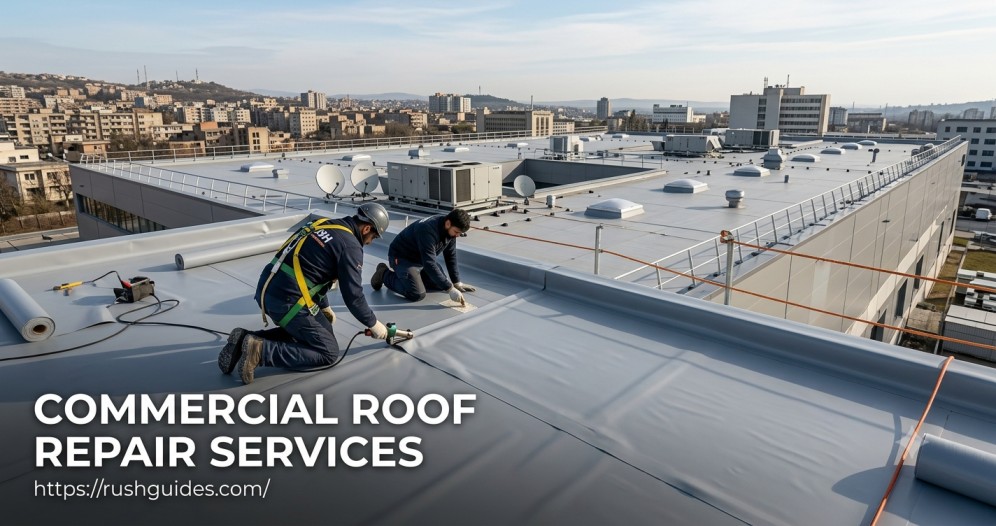
Your commercial roof is doing a lot of heavy lifting. It protects your inventory, your staff, your equipment, and your building’s structural integrity around the clock. And yet most business owners don’t think about it until there’s a brown stain spreading across the ceiling tiles or water pooling somewhere it absolutely shouldn’t be.
That’s the expensive way to handle it.
Getting ahead of commercial roof repair services, understanding what different fixes actually cost, and knowing how to pick a contractor who won’t cut corners, that’s what keeps a small repair from turning into a five-figure replacement job. Here’s everything you need to know.
What Commercial Roof Repairs Actually Cost in 2025
Let’s start with the number everyone wants first. Commercial roof repairs typically range from $600 to $4,500 or more, depending on the size of the problem, the roofing system involved, and how long the issue has been developing.
That’s a wide range because “repair” covers a lot of ground. A small seam patch is not the same job as replacing failed flashing around six HVAC units. Commercial roof repair costs are generally much lower than replacement, typically running $3 to $10 per square foot depending on the issue.
Minor commercial repairs in 2026 typically range from $4 to $9 per square foot. Comprehensive restoration or complex repairs involving multiple penetrations such as HVAC units and vents can reach $18 to $35 per square foot.
To put that in perspective: if you’re in a city like Chicago with strict municipal codes, labour and compliance costs will sit on the higher end. Regional rates vary, so always get local quotes.
The 5 Most Common Commercial Roof Repairs
The most common repairs involve penetrations, drains, seams, flashing, and membrane punctures or failures.
Here’s a breakdown of each:
Penetration repairs (around HVAC units, vent pipes, electrical conduits) tend to be the most frequent source of failures. Equipment vibrates, materials expand at different rates, and stress points form over time. These are worth catching early because water gets in fast around open penetrations.
Drain failures matter more than most people realise. Unlike sloped roofs that naturally shed water, flat commercial roofs depend on internal drainage systems. When drains fail, water accumulates, adding weight stress and accelerating material deterioration. A single pinhole near ponding water can channel hundreds of gallons into a building.
Seam failures are especially common on single-ply membrane systems. Seam failures develop gradually through UV degradation, poor drainage creating standing water, and temperature-induced expansion and contraction. A small seam repair today prevents expansion to dozens of feet next season.
Flashing damage is one of the most underestimated problems in commercial roofing. Up to 90% of commercial roof leaks originate at flashings and penetrations, not the field membrane. That stat catches most building owners off guard. Flashing seals the transition points where the membrane meets walls, curbs, and parapets, and when it lifts or corrodes, water has a direct entry point.
Membrane punctures and blistering are common on EPDM, TPO, and modified bitumen systems. Blistering and bubbling occur when air or moisture becomes trapped under the roofing membrane. This is especially common with EPDM, TPO, or modified bitumen systems. Small isolated blisters can be patched. Widespread blistering usually signals something more systemic.
Repair vs. Replacement: The Decision That Matters Most
Knowing when to repair and when to replace is where commercial roof decisions get real. The wrong call either way costs money.
Commercial roof lifespan typically runs 20 to 30 years for TPO or EPDM membrane roofing. If yours is less than 15 years old and well maintained, repairs generally offer better value, extending service life for years to come.
A useful rule of thumb: if less than 25% of your roof shows damage and the roofing system is less than 15 years into its expected lifespan, repairs are often sufficient. Widespread issues, recurring leaks, or roofs approaching 20+ years typically make replacement the more cost-effective solution.
There’s also a smart way to think about the cost comparison. A $20,000 repair expected to last 5 years costs $4,000 per year, while a $60,000 replacement lasting 20 years costs $3,000 per year, making replacement the better long-term value despite the higher initial cost.
Replacements, for context, run significantly higher. A commercial roof replacement costs between $5.50 and $12.00 per square foot on average in 2025, according to data compiled from the National Roofing Contractors Association and RSMeans Construction Cost Data. For a standard 10,000 square foot commercial building, that puts the total investment somewhere between $55,000 and $120,000.
Warning Signs Your Commercial Roof Needs Attention Now
The challenge with commercial roofs is that the damage usually isn’t obvious until it’s already serious. Most buildings don’t have easy roof access, and most busy property managers aren’t up there looking around regularly. These are the signs worth knowing.
Interior Red Flags
The most obvious sign demanding immediate commercial roof repair is visible water damage. Brown or yellowish stains on ceiling tiles, walls, or around light fixtures indicate water infiltration that’s already compromising the roof’s integrity. By the time you see a stain, water has already been working its way through multiple layers for a while.
The actual source of the leak may be 10 to 100 feet from the stain, travelling horizontally along metal deck flutes before finally dripping through the ceiling. This is why tracing leaks from interior stains alone is difficult without professional assessment.
One frequently missed warning sign is your energy bill. Wet insulation loses effectiveness and forces commercial HVAC systems to run harder, adding operational expenses and putting comfort at risk. If you notice a pattern of energy inefficiency, it may indicate hidden leaks above that section.
Mould and persistent musty odours are another interior clue. They point to long-term moisture sitting somewhere in the roof assembly, and they’re also a health and liability issue for anyone working in the building.
Exterior Red Flags
Ponding water on flat roofs that sticks around for more than 48 hours is a serious sign that requires immediate attention. The weight of standing water, approximately 5 pounds per square foot per inch of depth, can compromise your roof’s structural integrity and void manufacturer warranties.
Visible sagging, cracking, or other visible damages from ground level mean bad news for your roof’s structural stability, and you shouldn’t wait to have these addressed.
Blisters and bubbles form when moisture or air becomes trapped beneath the roofing membrane, whether TPO, EPDM, or modified bitumen. In extreme heat, the process accelerates dramatically. Small, isolated blisters may be repairable. Widespread blistering across multiple sections is a strong replacement indicator.
Metal roofs may need close inspection for sediment trails along seams or around screws, which are clear indicators that water is getting through somewhere.
After a Storm
In the first six months of 2025 alone, the United States experienced 14 separate billion-dollar weather and climate disasters, with over $101.4 billion in total damage, much of it tied to buildings and infrastructure. Post-storm inspections aren’t optional anymore. Even if damage isn’t immediately visible after a severe storm, scheduling a roofing inspection is highly advisable, as some damage can remain hidden and grow worse over time until it finally becomes visible.
How to Choose the Right Commercial Roof Repair Service
There are a lot of roofers out there. Not all of them know commercial work, and not all of them will be straight with you about what your roof actually needs. Here’s what separates the good ones from the rest.
Prioritise Commercial Specialists
Commercial roofing projects are often more complex, larger, and specialised versus residential projects, so they require a unique contractor to ensure that the job is done correctly. Business owners should avoid contractors who primarily focus on residential work, even if they complete commercial projects occasionally.
A contractor who mainly does shingle work on houses is not the right person to assess a failing TPO membrane on a 20,000 square foot warehouse. The systems, the equipment, and the failure modes are completely different.
Verify Credentials Before Anything Else
Before hiring, check that contractors carry full liability insurance and workers’ compensation to protect your business if accidents happen on your property. Look for manufacturer certifications, which show they’ve completed special training and can offer better warranty options.
The National Roofing Contractors Association (NRCA) offers certifications worth checking for. Major membrane manufacturers like GAF, Carlisle, Firestone, and Johns Manville also certify approved contractors, and those certified installers typically have access to extended warranties that uncertified ones don’t.
Licensing requirements vary by state. California, for instance, requires a C-39 Roofing Contractor license for projects exceeding $500. Other states like Texas have no official licensing requirements. Know your local rules.
Get Multiple Quotes and Read Them Line by Line
The most reliable way to get a fair price is to collect three detailed written proposals from licensed contractors, review each line by line, and make sure you are comparing the same scope of work across all bids. The lowest bid is rarely the best deal if it skips on material grade, tearoff, insulation, or warranty terms.
A suspiciously cheap quote usually means something is being skipped, whether that’s proper tear-off, adequate insulation, or the kind of flashing detail work that actually keeps water out for the long term.
Ask the Right Questions
Ask potential contractors what maintenance programs they offer after installation. The best contractors will explain how they can help protect your investment by providing ongoing care to prolong the life of your roof. Also ask who will supervise the project daily, so you know who’s responsible for ensuring the work meets standards.
Ask specifically about their experience with your roof type. A contractor with decades of built-up roofing experience but no TPO work shouldn’t be touching a single-ply membrane job.
Watch for Red Flags
Avoid contractors who use door-to-door sales, make unusually low bids, use high-pressure tactics, or have no local presence. After a major storm, storm chasers flood an area offering quick-turnaround deals. Many of them do substandard work and are gone before you notice the problems.
Roofing projects are often more expensive during peak seasons when demand is high, such as the summer months. Planning commercial roof work during the off-peak season, like fall or winter, may yield cost savings. Worth factoring in if your repair isn’t urgent.
Commercial Roof Solutions: Maintenance to Avoid the Big Bills
The business case for preventive maintenance on a commercial roof is straightforward. IBISWorld projects the roofing contractors industry will reach $76.4 billion in revenue by the end of 2025, reflecting continued growth driven by more frequent extreme weather events. With demand outpacing supply of skilled labour, wage pressure alone will keep labour costs firm. That means repair costs aren’t going down. Getting ahead of problems now saves real money.
Most contractors recommend twice-yearly professional inspections, typically in spring and autumn, plus a check after any significant storm. Many offer maintenance contracts that bundle inspections with priority emergency response, which is worth considering if your building has older systems or a history of leaks.
Well-executed repairs can buy you 2 to 5 years to properly budget for an eventual replacement. This strategy helps many property managers handle commercial roof maintenance budgets more effectively.
FAQ: Commercial Roof Repair Services
How often should a commercial roof be inspected?
Twice a year at minimum, and after any severe weather. Many roofing companies include inspection services as part of maintenance agreements, which is worth considering for buildings over 10 years old.
What’s the 25% rule in commercial roofing?
The 25% rule is a building code standard that requires a full permitted roof replacement if more than 25% of a roof is repaired or replaced within a 12-month period. This rule exists to prevent property owners from making major repairs piecemeal to avoid the cost and permitting requirements of a full replacement.
Can I stay open during commercial roof repairs?
Usually yes for minor repairs. Larger projects or full replacements may require some coordination around occupied areas, particularly for buildings with open ceiling layouts or HVAC systems that need to be taken offline temporarily.
How long does a commercial roof last?
With proper installation and regular maintenance, modern roofing systems can last 20 to 30 years. TPO and PVC single-ply membranes typically offer 20 or more years of service, while built-up roofing systems can last 25 to 30 years when properly maintained.
What should I do if my commercial roof is leaking right now?
Call a contractor with emergency services. While waiting, document everything with photos, contain any water with buckets or barriers, and if the leak is near electrical systems, shut off power to that section and treat it as a safety issue. Don’t attempt roof access in wet conditions.
The bottom line is simple: commercial roof repair services are far cheaper than commercial roof replacements, and commercial roof replacements are far cheaper than the disruption, liability, and asset damage that comes from ignoring a failing roof. Get inspections on the calendar, know your warning signs, and vet any contractor you bring on properly. Your roof will handle the rest.
Read More About: Cody Alan Williams