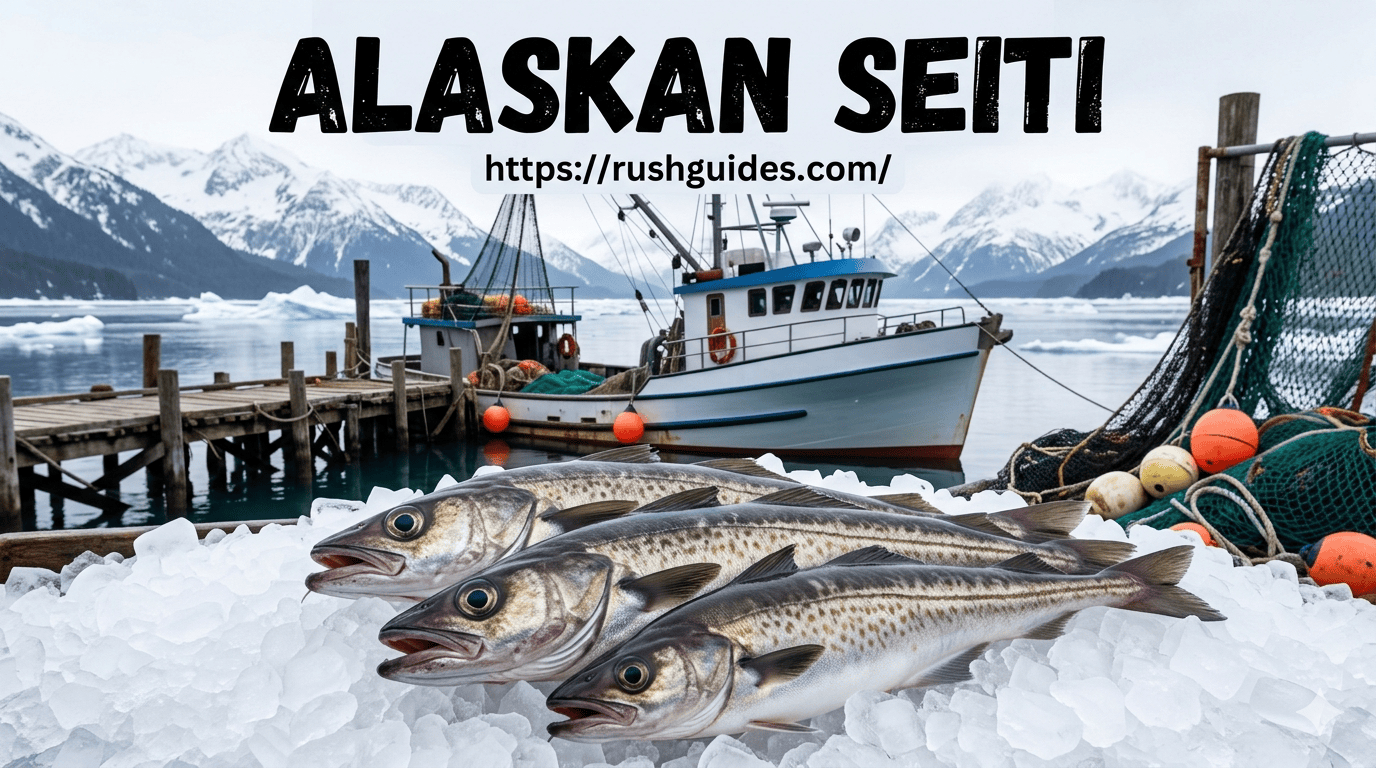
You’ve probably eaten Alaskan Seiti dozens of times without knowing its name. That fish sandwich you grabbed from McDonald’s? The Filet-O-Fish is made from wild-caught Alaska pollock, flash-frozen on the boat, cut into rectangular fillets, breaded, and par-cooked before being shipped to restaurants. Those imitation crab legs in your California roll? Same fish. The frozen fish sticks your kids inhale on a Friday night? You guessed it.
Alaskan Seiti is just another name for Alaska pollock, one of the most popular and widely eaten fish in the entire world. The name trips people up because it sounds exotic or technical, but there’s a simple explanation. The word “seiti” comes from Northern Europe, mainly from Finland and other Scandinavian countries. In Finnish, pollock is called “seiti,” so when you put “Alaskan” in front of it, you get a name that tells you the fish comes from the cold waters near Alaska.
So no, it’s not rare. It’s not expensive. And it’s almost certainly already in your freezer. Here’s everything worth knowing about it.
What Exactly Is Alaskan Seiti?
Alaskan Seiti refers to Alaska pollock, a marine fish scientifically known as Gadus chalcogrammus. It belongs to the cod family and lives mainly in the cold waters of the North Pacific Ocean, particularly in waters near Alaska and the Bering Sea.
Although it’s related to cod, Alaskan Seiti has its own commercial identity. It’s generally smaller than Atlantic cod but has become even more significant in some seafood markets because of the sheer scale of its catch and processing.
The meat is solid, white, and tender. Its taste is light and slightly sweet, which is why it appeals even to people who aren’t typically fond of fish. There’s none of that overpowering “fishy” smell or flavour that puts so many people off. It soaks up marinades, herbs, and spices readily, which makes it genuinely versatile in the kitchen.
Why Does It Have So Many Names?
This is where it gets slightly confusing. Alaskan Seiti is also known as Alaska pollock, walleye pollock, and Pacific pollock. These names can make the topic feel more complicated than it really is, especially for people who are trying to buy fish for the first time or search for recipes online.
The word “seiti” is more often seen in Nordic and European food markets, which is one reason the name feels unfamiliar to many readers. A shopper in one country may see “pollock” on a package, while another shopper elsewhere may see “seiti” and think it’s something completely different.
The bottom line: pollock, seiti, walleye pollock, and Alaskan Seiti all point to the same fish. Different regions, same species.
The Nutrition Numbers That Make It Worth Eating
This is where Alaskan Seiti genuinely earns its place on your plate, especially if you care about fitness, weight management, or just eating clean without spending a fortune.
A 100g serving of Alaskan pollock provides approximately 100 kcal, around 20g of lean protein, 0.5–1g of fat, and roughly 500mg of omega-3 fatty acids.
Protein composition is complete in the sense that all essential amino acids are present in healthy proportions. That matters if you’re tracking macros or trying to build or maintain muscle. For reference, it contains more protein than chicken, pork, or ground beef, but the fat content and specifically saturated fat is much lower.
On the omega-3 front, it provides 344 milligrams of omega-3 fatty acids per 100g serving, which is twice as much as the same amount of cod.
In terms of micronutrients, cooked Alaska pollock delivers 23.48g of protein per 100g and is particularly rich in selenium (80% of daily value), vitamin D (higher than 94% of foods), choline, vitamin B12, and magnesium.
Mercury is also worth flagging for anyone eating fish regularly. Its flesh contains just 0.031 parts per million of mercury, and the US FDA categorises Alaska pollock in its safe seafood choices. That makes it genuinely low-risk for regular consumption, including for pregnant women, though always check with your doctor or midwife first.
It’s Literally in More Food Than You Think
Each year, humans on two continents haul 3.5 million tonnes of pollock from the sea. Beyond fast-food sandwiches, pollock is the main source of supermarket fish sticks, valuable roe, and the shredded surimi that goes into imitation crab.
Alaska pollock is a popular choice for fast food chains’ fish sandwiches, including McDonald’s Filet-O-Fish, Burger King’s Big Fish sandwiches, Arby’s, Dairy Queen, and White Castle, due to its affordability, versatility, and mild flavour.
Surimi production dates back centuries in Japan, but it was Alaska pollock that made it scalable. Its mild flavour, firm texture, and bright white flesh made it ideal for binding, shaping, and flavouring into a variety of seafood products.
The reach of this fish is frankly astonishing. That California roll? Pollock. That crab dip at a party? Probably pollock. The fish in your frozen lasagne? Quite possibly pollock. Those fish sticks in your freezer? Most likely made from this fish.
The Sustainability Story Is Actually Good
Seafood sustainability can feel like a marketing buzzword, but with Alaskan Seiti, the credentials are real and independently verified.
The Alaska pollock fishery first achieved MSC (Marine Stewardship Council) certification back in 2005. It makes up approximately 9.5% of total landings from all certified fisheries by volume and is one of the highest-scoring large fisheries in the MSC program.
The Alaska pollock fishery has maintained MSC certification since 2005 and has now been recertified for another five-year period following a comprehensive, independent assessment. That’s not a one-off achievement. That’s two decades of verified, responsible management.
Wild Alaska pollock is the largest certified sustainable fishery in the world, accounting for 43% by weight of all seafood caught in the US. NOAA endorses Wild Alaska Pollock as a smart seafood choice because it’s sustainably managed, responsibly harvested, and not subject to overfishing.
The fishery supports nearly 30,000 jobs across the USA and has an annual catch worth over US$1.4 billion in wholesale value.
The Wild Alaska Pollock fishery donates more than a million seafood meals annually through the SeaShare programme, ensuring high-quality protein reaches tables across the country.
As of early 2026, the fishery remains in excellent shape. According to the NOAA Stock Assessment and Fishery Evaluation (SAFE) 2024, the Eastern Bering Sea biomass is estimated at 9.6 million metric tonnes, well above the target reference point. The Total Allowable Catch for 2025 was set at 1.48 million metric tonnes.
How to Cook Alaskan Seiti at Home
The beauty of this fish is that it asks very little of you in the kitchen. Here’s what works:
Pan-Fried: Pat the fillet dry, season with salt, black pepper, and paprika, then cook in a hot pan with a small amount of oil for 3–4 minutes per side until golden. That’s genuinely it. Serve with a squeeze of lemon and some greens.
Baked: Coat in olive oil, garlic, and your choice of herbs (dill and parsley work well), then bake at 200°C (390°F) for 12–15 minutes. The flesh flakes beautifully and stays moist.
In Tacos: This is where Alaskan Seiti really shines. Pan-fry or grill the fillet, break it into chunks, and load it into corn tortillas with shredded cabbage, a lime-based slaw, and hot sauce. Fish tacos don’t need to be complicated.
For Meal Prep: Bake a batch of fillets on Sunday, portion them out, and use them across the week in salads, wraps, rice bowls, or pasta. The mild flavour pairs with almost anything.
One practical tip worth knowing: when buying, prioritise dry-freeze pollock fillets. Defrost slowly in the refrigerator over several hours, and you’ll minimise water loss and keep the meat’s structure and nutritional properties intact.
Where to Buy It and What to Look For
Most large supermarkets stock Alaska pollock or Alaskan Seiti, usually in the frozen fish aisle. It’s one of the most affordable white fish options available, and quality is generally consistent because the fish is processed and frozen quickly after being caught.
Look for the blue MSC label on the packaging. That label tells you the fish was caught from a certified sustainable fishery. It’s one of the few food labels that actually means something, backed by independent audits rather than self-reported claims.
If you’re buying from a fishmonger or fresh fish counter, ask specifically for wild-caught Alaska pollock. Farmed pollock exists but is far less common; the wild-caught version is what most of the research, certifications, and sustainability claims refer to.
Frequently Asked Questions About Alaskan Seiti
Is Alaskan Seiti the same as cod? They’re related but not the same. Alaskan Seiti belongs to the cod family but has its own commercial identity. It’s generally smaller than Atlantic cod and milder in flavour.
Is it safe to eat regularly? Yes. Its very low mercury content and strong nutritional profile make it one of the safer fish for frequent consumption. Two to three servings per week fits comfortably within standard dietary guidance, but always check with a health professional if you have specific concerns.
Why does it have a Finnish name? The word “seiti” is the Finnish word for pollock. When combined with “Alaskan,” it’s simply a regional naming convention that’s become common in Nordic and European seafood markets.
Is it the fish in McDonald’s Filet-O-Fish? Yes. Wild Alaska Pollock is the fish of choice for McDonald’s and makes up the famous Filet-O-Fish. McDonald’s sources it from fisheries operating out of the Bering Sea in Alaska.
Is it good for weight loss? At roughly 100 calories per 100g with around 20g of protein and minimal fat, it’s one of the better lean protein options available, regardless of your goals.
If you’ve been sleeping on Alaskan Seiti, now’s the time to actually pick some up. It’s affordable, sustainable, easy to cook, and nutritionally hard to beat as a lean protein. The fact that it’s been quietly powering the world’s most consumed fast-food fish sandwiches for decades says something about just how good it is at doing its job.
Read More About: Ahrefs Traffic Checker